
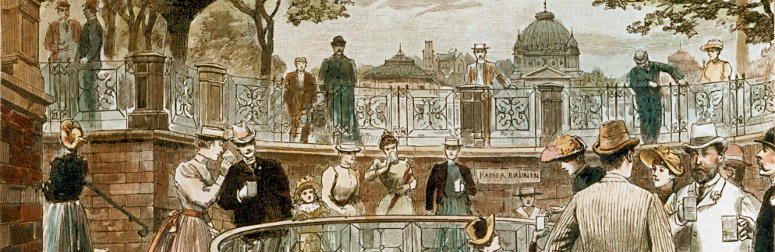



Keywords
Small Fountain Hall (Spielbank)
The Brunnensälchen (small spring room) was built in 1838 by the Darmstadt master builder Georg Moller at the behest of Landgrave Ludwig. This was preceded by discussions of the Kurhäuschen spa house, which no longer met the challenge of the slowly expanding spa business. Thus, the Brunnensälchen was created as a new “social club” with a large Kursaal entertainment room. In 1841, the Blanc brothers took over the building and set up a branch of the casino inside, whose main location was in the so-called “Anhaltische Houses” on Louisenstraße. The casino made a significant contribution to the rapid development of the spa business. With the opening of the First Kurhaus spa in 1843, into which the casino also moved, the Brunnensälchen lost its importance for the spa business and was put to different uses, including as a Russian Chapel (1876-1879) and as an inhalatorium (1882-1888). From 1900 until 1916, it housed the studio of sculptor Fritz Gerth, and around 1910, it accommodated the so-called Zander Institute, which offered medical-mechanical treatments with physical therapy devices based on the ideas of the Swedish physician Gustav Zander. After the Second World War, the casino, which was refounded in 1949, occupied the Brunnensälchen.
Illustrations (titles and descriptions in German)
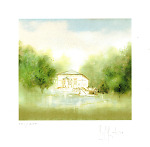
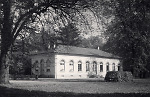
Aufnahme zwischen 1890 und 1910
(Photographs, contemporary)

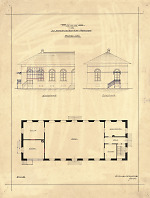
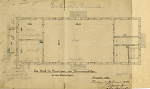
Seitenansicht und Grundriss um 1899 (Maßstab 1:100)
(Plans, Outlines, Drawings)
Building History
- Construction
- 1838
- Conversion
- seit 1949 mehrfach
Location
Networking
Follow the links below to display similar records from Spa Places.
- Subject Area
- Culture
- Funding
- public
- Keywords
- Spa houses Recreational facilities
References
StA HG C 02 Kurverwaltung Nr. 181 (Russische Kapelle)
StA HG C 02 Kurverwaltung Nr. 194 (Inhalatorium)
Kurpark S. 64-65
Baeumerth, Das Brunnensälchen S. 12-22
Baeumerth, Kennen S. 36-38
Baeumerth, Königsschloß S. 41, 150-152
Fechtner, Altes Bad Homburg S. 58
Gunkel, Geschichte S. 6
Rowedder, Denkmaltopographie S. 271
Walsh, Trapps S. 74
DenkXweb
Recommended Citation
„Small Fountain Hall (Spielbank)“, in: Orte der Kur <https://www.lagis-hessen.de/en/odk/record/id/1081> (aufgerufen am 17.09.2026)