



Extended Search
Sanatorium of Dr. Pariser (Sanatorium Clara Emilia, Park-Sanatorium (1928-1979), Paul-Ehrlich-Klinik (seit 1979))
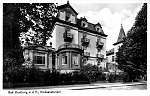
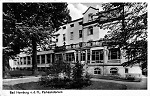
In 1903, the Jewish physician Dr. Kurt Pariser opened the Clara Emilia Sanatorium, named after his mother, on Landgrafenstraße Road. It was the preferred destination for Russian spa guests and specialized in the treatment of gastrointestinal diseases as well as eating and metabolic disorders. Starting around 1904, he developed the so-called “Homburger diet”, which was also recommended by other physicians and promoted the Homburg zwieback industry (zwieback - a hard, dry twice-baked biscuit). Right after the First World War, Dr. Pariser was able to continue operations in spite of great difficulties with the local workers’ counsel, but growing anti-Semitism drove him to close his business, which was threatened with bankruptcy, in 1920 and move to Berlin. In 1928, the Reichsbahn railway insurance company took over the building and continued business under the name of “Parksanatorium” (Park Sanatorium). At the end of World War II, it was confiscated and used as accommodation for American soldiers. The Bundesbahn Federal Railway Insurance Company, which had been restructured in the meantime, got it back in 1956 and reopened it as a sanatorium after a three-year period of expansion and renovation. In 1979, it was renamed the Paul Ehrlich Clinic, the Jewish Nobel prize laureate who passed away there in 1915. From 1980 until 1985, there were more essential renovations and modernizations, although treatment still focused on metabolic disorders.
Illustrations (titles and descriptions in German)

Building History
- Construction
- 1900
- Conversion
- 1959 (Umbau zur Paul-Ehrlich-Klinik)
Location
Networking
Follow the links below to display similar records from Spa Places.
- Subject Area
- Social and Health
- Funding
- private
- Keywords
- Sanatoriums
References
Arnsberg, Gemeinden 1 S. 397-398
Grosche, Geschichte 3 S. 202-203
Grosche, Juden S. 33-34
Hofmann, Wachstum S. 43
Rowedder, Denkmaltopographie S. 124
Walsh, Kurhotel S. 82
DenkXweb
Recommended Citation
„Sanatorium of Dr. Pariser (Sanatorium Clara Emilia, Park-Sanatorium (1928-1979), Paul-Ehrlich-Klinik (seit 1979))“, in: Orte der Kur <https://www.lagis-hessen.de/en/odk/record/id/1106> (aufgerufen am 02.10.2026)