



Extended Search
Small Pine Forest
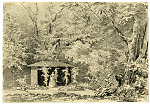
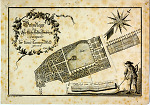
In the 17th century, the landgraves had already planted coniferous trees and set up a game reserve in the Kleiner Tannenwald (Small Fir Forest). But only when Friedrich V and his wife Caroline converted the park into an English-Chinese landscape garden in 1772 did it achieve its artistic importance as a garden. Special features, such as the pond with its bridge and island colonnade, the Chinese teahouse, winding paths, a grotto, and an ice cellar, were new in Homburg and attracted a lot of attention. After Caroline’s death in 1822, her daughter-in-law Elizabeth took over the park and had a dairy farm set up as a small model farm. After Elizabeth's death in 1840, the park was opened to visitors and enjoyed a great amount of popularity. Around 1900, the dairy farm was expanded into a café to meet the needs of the spa guests. The “Kleiner Tannenwald” changed hands many times and only came to be owned by the city in 2002.
Illustrations (titles and descriptions in German)

Building History
- Construction
- 1772
Location
Networking
Follow the links below to display similar records from Spa Places.
References
Baeumerth, Fremde S. 232
Datzkow, Kleiner Tannenwald
Junker-Mielke, Gartendenkmale S. 15-19
Junker-Mielke/Walsh, Gartenlandschaft S. 54-65
Mattausch, Natur und Kunst
Modrow, Parkanlagen S. 6-9
Rowedder, Tannenwald S. 46
Walsh, Gartenlandschaft S. 61-63
DenkXweb
Recommended Citation
„Small Pine Forest“, in: Orte der Kur <https://www.lagis-hessen.de/en/odk/record/id/1186> (aufgerufen am 01.10.2026)