



Extended Search
Steel Spring
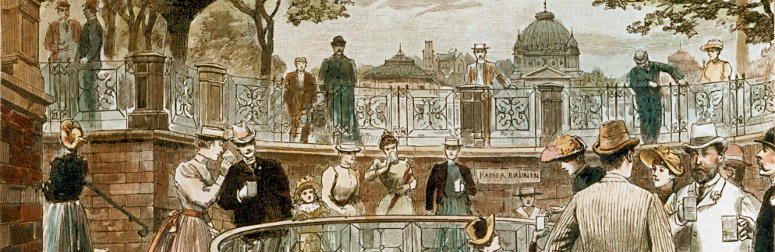
The Stahlbrunnen (Steel Spring) was bored by engineer Jules Ribes in 1841 by the request of the Kurhaus spa operating company. It was the first spring drilled by the Kurhaus spa company, which was obligated to promote the spa business. Because of the high iron content of the water, which also influenced the name, it was primarily used for drinking spa treatments, especially for anemia. The chemist and university professor Julius Liebig from Gießen studied the water in 1842, and the Homburg pharmacist Eduard Fresenius also studied it in 1872. Already in 1846, the brass pipes, which had been corroded by the iron, were replaced by cast iron pipes and 10 years later by copper pipes. The first redesign of the spring was carried out in 1867. The appearance of the spring was fairly simple, with the spring located in a depression in the ground and surrounded by simple iron bars arranged in the shape of an oval swinging in and out. The redesign as it appears today was done in 1965-66. An eight-sided base surrounds the also eight-sided tap in the depression that a stairway leads to from the path.
Illustrations (titles and descriptions in German)


Building History
- Construction
- 1841
- Conversion
- 1856, 1867, 1965/66, 1933 (jeweils Neufassung)
- New Building
- 1965/66
Location
Networking
Follow the links below to display similar records from Spa Places.
- Subject Area
- Social and Health
- Funding
- public
- Keywords
- Springs
References
StA HG, E 41, Nr. 234
HHStAW, Bestand 3011, Nr. 2397
Kurpark S. 33
Baeumerth, Kennen S. 38-41
Lingens, Frühgeschichte S. 25-28
Recommended Citation
„Steel Spring“, in: Orte der Kur <https://www.lagis-hessen.de/en/odk/record/id/1113> (aufgerufen am 07.10.2026)